
News about reuse and plastic waste prevention
October 1, 2026

Featured
EPR Arrives But One Size Doesn't Fit All |
|

|
Extended Producer Responsibility (EPR) laws are now in place – or in the process of being implemented – in at least 60 countries and 30 US states.
Because they make producers more accountable for the waste their products create, EPR rules are viewed as an effective legislative route to drive change across the waste hierarchy. But as several of our stories this month show, it's not an easy journey. EPR is being implemented differently in different Latin American countries, not least due to a lack of facilities to support waste collection, sorting and reprocessing. These differences and delays matter. Multinational manufacturers are – unsurprisingly – reluctant to adapt to the nuances between individual markets, which in turn makes challenges more likely. This is also the case with differences between states; see our update from Oregonon this. Yet there is evidence that EPR is driving change. It was a central topic at the Packaging Recycling Summit,with industry delegates discussing how EPR is influencing material recovery technologies and packaging design. As part of its response to EPR requirements, Colgate-Palmolive is putting tracking mechanismsin its packaging to understand more clearly what happens when it enters active recycling facilities. Stories like these provide promising evidence that EPR will drive positive change, but the case for convergence in requirements is strong. Consistency across the EU is a prime reason that Europe is often perceived as having the most mature and effective EPR laws. Of course, we should not view EPR legislation as the end of the journey. Prevention is better than cure and the news from Kenya where the government is exploring a National Refill and Reuse Frameworkpoints to the need for a more holistic approach that embeds waste prevention. See you next month![Image Credit: © Aleix Ventayol] |
Highlights
House Committee Advances Two Federal Recycling Packaging Bills |
|

|
Lawmakers moved the Recycled Materials Attribution Act forward, setting federal standards for marketing recycled-content products and directing the Federal Trade Commission to revise its Green Guides. Another law, the Packaging and Claims Knowledge Act, would create a federal labeling framework for packaging marketed as recyclable, reusable or compostable, which would require third-party verification and FTC oversight. Both will now move to the full House. [Image Credit: © Creative Commons Attribution-Share Alike 3.0 Unported]
|
Refillable Deodorant Sales Surge |
|

|
Refillable deodorant sales grew 45% over the past year, but these products still account for only around 4% of the deodorant market. For example, Unilever acquired refillable personal care brand Wild for approximately €275 million and its flagship Dove brand has a refillable deodorant format. Valued at around $210 million last year, the market is projected to reach $310 million by 2034, with Europe holding over a third share. [Image Credit: © PNW Production on Pexels] |
Unilever Joins Consortium For Paper Based Flexible Packaging |
|

|
Unilever joined the PaperFlex Consortium, an initiative convened by the Ellen MacArthur Foundation and powered by RE-SET, bringing together members to develop alternative solutions for flexible plastic packaging made from paper-based materials. Pablo Costa, Unilever's Global Head of Packaging, explained the move and the consortium's work in more detail. [Image Credit: © Unilever]
|
Colgate Toothpaste Tube Recycling Lawsuit Gets Trial Date |
|
|
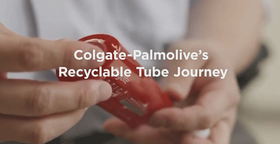
A federal judge set an April 2028 trial date in a class action lawsuit accusing Colgate-Palmolive of misleading recyclability claims on toothpaste tubes. Three consumers filed the suit in 2023 in US District Court, Northern District of California. Judge Joseph Spero granted class certification in April and denied an appeal in July. Plaintiffs say California recovery facilities do not accept the tubes. Colgate-Palmolive says it spent five years researching the tube, made primarily of number 2 HDPE plastic, though it now adds a footnote about local acceptance.[Image Credit: © Colgate Palmolive Company]
|
Oregon EPR Packaging Law Survives First Legal Test |
|
|
In National Association of Wholesaler-Distributors v. Feldon, a court rejected all constitutional challenges brought against Oregon's extended producer responsibility law covering plastics and packaging. NAW challenged the law on constitutional grounds. The ruling marks an early loss for opponents hoping to see it struck down in the courts, but NAW is expected to appeal. [Image Credit: © engin akyurt on Unsplash] |
Germany Sent Nearly A Fifth Of Its Plastic Waste Exports To Turkey Last Year |
|
|
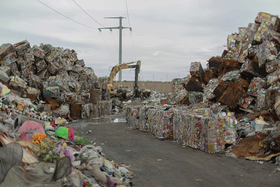
Germany exported 814,000 tonnes of plastic waste in 2025, the largest volume of any country, of which Turkey received almost 19%. All EU countries combined sent Turkey over 500,000 tonnes. Biologist Sedat Gundogdu called the pattern a toxic cycle, warning microplastics, but the Turkish Plastics Industry Association said the imports supply raw materials and generate jobs. An EU ban on such exports to non-OECD countries begins in November. As an OECD member, Turkey is exempt from the ban.[Image Credit: © mostafa meraji from Pixabay]
|
Recycle Week Survey Finds Most Britons Recycle Regularly |
|
|
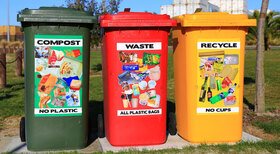
A Recycle Now survey in the UK found that 89% of households regularly recycle, but 38% admitted they could recycle more. 84% said everyone bears responsibility for cleaning the environment. However, the authors said those feel recycling is worthwhile dropped from 81% five years ago to 69% today.[Image Credit: © Nareeta Martin via Unsplash]
|
Amcor Expands Refill Packaging Line For Beauty Brands |
|

|
Amcor’s expanded refill and refillable packaging portfolio for beauty and personal care combines rigid and flexible formats, such as a mono-material Wave pump, AmPrima recycle-ready pouches, up to 2 liters in volume, and a Magic One airless dispenser for facial skincare. They can incorporate post-consumer recycled content and align with the EU's Packaging and Packaging Waste Regulation. Amcor cited research showing 74% of consumers want more refillable packaging.[Image Credit: © Amcor plc]
|
Australia Ditches Packaging Law Plan Amid Cost Concerns |
|
|
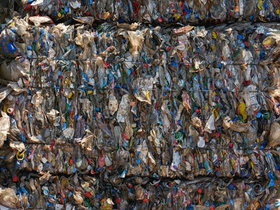
Australia's federal government abandoned a planned commitment to introduce mandatory packaging standards meant to reduce plastic waste and boost recycling, citing cost-of-living pressures as producers are expected to pass new costs on to consumers. Boomerang Alliance director Jeff Angel said the depth of outrage from stakeholders, including state governments and green campaigners, has never been seen. Cip Hamilton of the Marine Conservation Society called the decision deeply disappointing.[Image Credit: © engin akyurt on Unsplash]
|
Latin America's EPR Rules Advance Unevenly Across Countries |
|
|
Extended producer responsibility laws are progressing at different speeds across Latin America. Chile enacted its EPR law in 2016 with obligations beginning in 2023; Colombia set mandatory recovery targets through Resolution 1407; and Uruguay became the region's first country with an operating packaging-specific EPR scheme. Mexico published a General Law on Circular Economy in January 2026, adding a national EPR framework for gradual rollout. However, the speed and scope of regulation varies widely across the region. Association of Plastic Recyclers strategy director Martha Ricardi said development of EPR frameworks in the region is advancing rapidly, but compliance remains uneven, blaming fragmented regulations and a shortage of recycling facilities.[Image Credit: © Rory Hennessey on Unsplash]
|
Airborne Microplastics Traced To Indonesian Landfill Fires |
|

|
A landfill fire at Jatiwaringin burned for 10 days in July, sending smoke and plastic fragments across surrounding areas. Another fire broke out at the Putri Cempo landfill in Solo, Central Java, in early September. Environmental group Ecoton detected airborne microplastics across 18 Indonesian cities, and synthetic fiber particles appeared in 68 rivers. A 2024 Cornell University study found Indonesians consume roughly 15g of plastic particles monthly, the highest rate measured globally. [Image Credit: © Collab Media on Unsplash]
|
Single Use Sachets Fuel A Hidden Plastic Crisis |
|
|
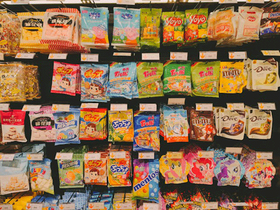
Roughly 855 billion single-serve sachets are sold worldwide yearly, projected to reach 1.3 trillion by 2027, with Southeast Asia consuming about half. The Philippines use about 60 billion sachets yearly, and thy account for 52% its plastic waste. Indonesia generates about 768,000 metric tons of sachet waste yearly. An audit of over 33,000 sachets named Unilever, Nestle and Procter & Gamble as leading producers. Indonesia plans to phase out sub-50ml sachets by 2030. Ex-Unilever CEO Paul Polman said sachets have “proved impossible to collect at scale, let alone recycle.”[Image Credit: © Stephen Kong on Unsplash]
|
Photo Essay Documents New York's Plastic Waste Crisis |
|

|
A Guardian essay examines how plastic shapes daily life in New York City, from litter-strewn streets to recycling facilities. Global plastic production climbed from 2 million metric tons in 1950 to 450 million tons by 2019, while under one-tenth of plastic worldwide gets recycled. Average per-person plastic waste in the US grew from 60 pounds in 1980 to 218 pounds by 2018. Former EPA administrator Judith Enck said plastics recycling "is a dead end." New York's Packaging Reduction and Recycling Infrastructure Act stalled in Albany for a third straight year despite clearing the state senate.[Image Credit: © Douglas Schneiders on Pexels]
|
Finish Cuts Plastic Eighty Percent In New Detergent |
|
|
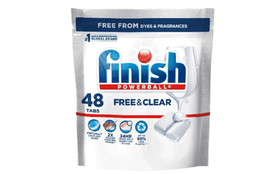
Reckitt's Finish brand introduced Finish Free & Clear, a dishwasher detergent that Reckitt says uses 80% less plastic than Finish tubs. Finish Free & Clear represents the brand's latest addition within its dishwasher detergent range, positioned around this packaging change as its defining feature. [Image Credit: © Reckitt] |